Your cart is empty
CRAFT
Cutting & Proportion.
Great products begin with considered cuts and the right proportions. Every piece of leather is used with purpose.


The Principles Behind a Well-Proportioned Belt
A well-proportioned belt starts with the right part of the hide, a considered cutting layout and consistent dimensions. The grain direction, strap width, thickness and tip shape all work together to create a belt that looks balanced, feels comfortable and performs well over time.
THE PRINCIPLES
GRAIN DIRECTION
We cut with the grain to ensure strength and natural beauty.
MATERIAL YIELD
Thoughtful planning minimises waste and imperfections.
BALANCED PROPORTION
Measurements are refined to create visual harmony and function.
PURPOSEFUL LAYOUT
Each cut is placed with care for the final construction.
Four Key Considerations

Grain Direction
Belts are typically cut along the strongest part of the hide to maintain a consistent grain pattern and structural strength.
Consistent grain pattern
Better strength and shape
Natural appearance

Panel Placement
The hide is carefully planned to select the best areas for belt straps and components, ensuring good appearance and minimal flaws.
Use the right part of the hide
Avoid visible flaws
Efficient material use

Symmetry & Balance
Balanced proportions create a clean and timeless look. Consistent width, straight edges and aligned details enhance overall appearance.
Uniform width and shape
Clean, straight edges
Balanced proportions

Minimising Waste
An efficient cutting layout respects the natural material and ensures more of the hide is used, while maintaining quality and consistency.
Thoughtful cutting layout
Better material utilisation
Responsible use of hide
How Proportion Influences the Finished Belt
The strap's width, thickness, tip shape and buckle size all affect how the belt looks and feels. A wider or thicker strap can create a more casual look, while a narrower strap often gives a cleaner, more formal appearance. The right proportions ensure the belt is comfortable, balanced and suitable for the intended use.

KEY CONSIDERATIONS
Grain Direction
Ensures strength and prevents stretch.
Panel Placement
Critical areas are placed for best appearance.
Symmetry & Balance
Balanced proportions create timeless designs.
Minimising Waste
Efficient layout respects the material.
KEY TAKEAWAY
Assembly is where craftsmanship becomes a complete experience. It is the harmony of material, technique and detail — built with intention to last a lifetime.
FAQ
-
The spine area of a bovine hide has the tightest collagen fiber structure and lowest stretch elasticity, ensuring the strap remains perfectly straight and doesn’t warp or sag under tension.
-
Dress belts are conventionally cut between 30mm and 35mm (1.2" to 1.35") for tailored loops, while denim and casual utility belts measure 38mm to 40mm (1.5") for proper visual weight.
-
Holes are spaced exactly 1 inch (25.4mm) apart, centered around the 5-hole range with an elongated oblong punch that allows prongs to sit completely flat.


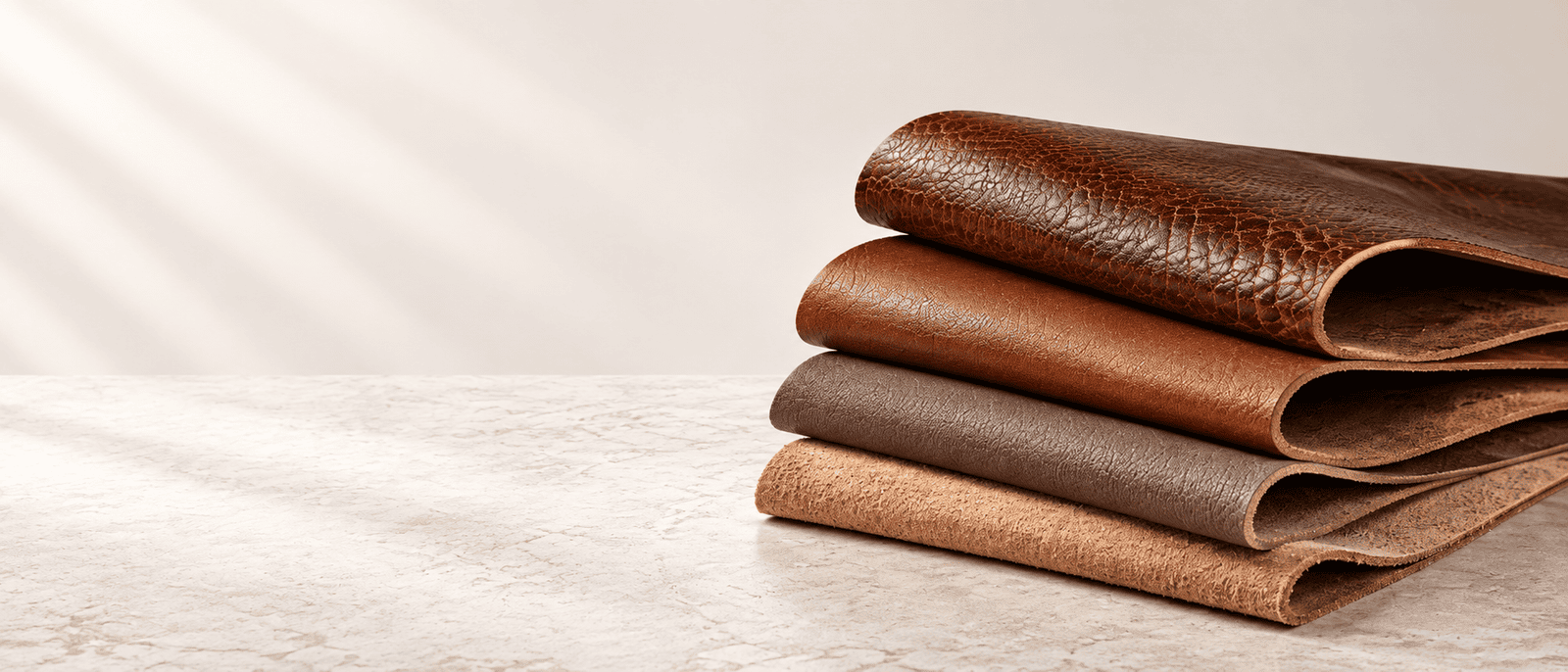
TORO7 CRAFTSMANSHIP
Precision Cut, Perfectly Proportioned
Every strap is hand-cut from full-grain buffalo hide, balanced for comfort and durability. Explore our complete collection of handmade leather belts.